
Your wedding. Your silhouette.
Choosing the right wedding outfit for groom celebrations is not decided by trend alone. A wedding suit, tuxedo, sherwani and bandhgala each create a different level of formality, cultural expression and visual weight. The best choice depends on the wedding function, venue, time of day, dress code, expected movement and how the groom wants to feel in the outfit. Explore Mizaj Men’s Attire to start comparing silhouettes.
That is why the decision becomes easier when you begin with the event rather than the garment name. A tuxedo may be ideal for a formal evening reception but feel overly formal at a relaxed daytime celebration. A sherwani may suit a traditional ceremony but be more elaborate than needed for an engagement. A bandhgala can bridge Indian formality and tailored structure, while a wedding suit remains one of the most adaptable options across functions.
Find your signature look
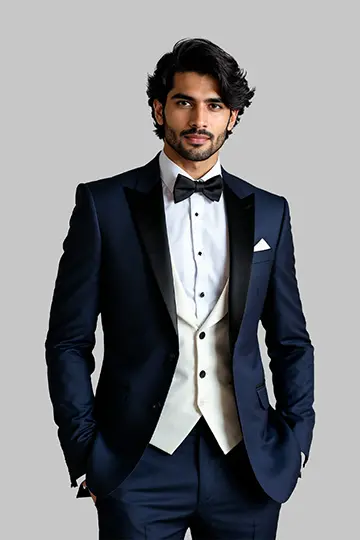 Versatile tailoringWedding SuitAdaptable across your wedding functions →
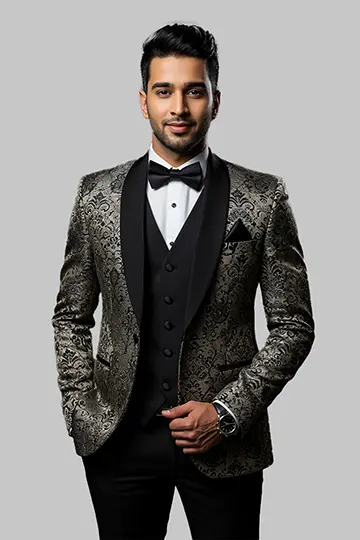 Evening formalityTuxedoA polished formal reception look →
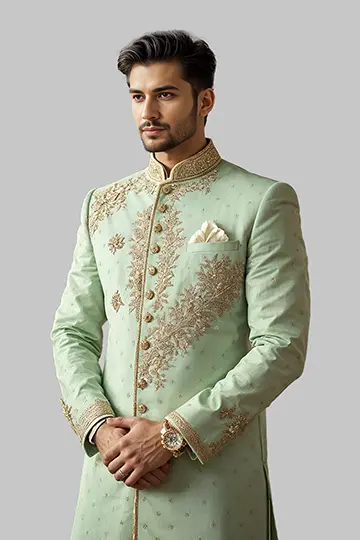 Ceremonial traditionSherwaniA traditional silhouette with presence →
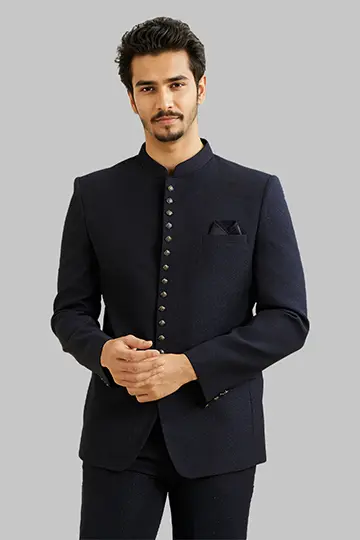 Indian formalwearBandhgalaClean structure and a closed neckline →
Table of Contents
Wedding Outfit for Groom: Start With the Function
When choosing a wedding outfit for groom celebrations, write down five things: the function, venue, time of day, dress code and how long the groom will wear the outfit. These details usually eliminate options that look attractive in isolation but do not fit the actual celebration.
A groom may spend several hours greeting guests, sitting for ceremonies, walking between spaces, taking photographs and moving on the dance floor. The outfit should therefore be judged as something to live in, not only something to photograph.
Wedding Suit: When It Makes Sense
A wedding suit is a flexible choice when the groom wants a tailored look that can be adapted through fabric, colour, shirt, waistcoat and accessories. It can work for an engagement, wedding ceremony or reception when the styling matches the setting.
For a daytime event, the overall look can be kept visually lighter through fabric and colour selection. For an evening function, a deeper colour or a more structured three-piece direction can create a sharper presence. The key advantage is versatility: one category can move from understated to highly formal without changing its basic identity.
Fit remains critical. Check shoulder balance, jacket closure, collar position, sleeve length, trouser rise and hem. The groom should sit, walk and raise his arms during fitting rather than approving the suit only while standing.
For more fitting checks, see how a suit should fit. Comparing your wedding outfit for groom functions is easier when you know which fit details to test.
Tuxedo: When the Event Calls for Evening Formality
A tuxedo is strongest when the celebration has a clearly formal evening character. It is particularly suitable for receptions, black-tie inspired events and indoor venues where the groom wants a disciplined, polished silhouette.
It should not be selected simply because it is considered more formal than a suit. If the wedding is outdoors, daytime, relaxed or strongly traditional, the tuxedo may feel disconnected from the event. The question is not whether a tuxedo is more premium, but whether the setting genuinely supports that level of formality.
For a closer look at construction and styling differences, read our tuxedo vs suit wedding reception guide.
Sherwani: When Tradition Should Lead
A sherwani is a strong choice when the wedding ceremony calls for a distinctly traditional groom look. Its longer silhouette gives it greater visual presence and it can support richer fabrics, embroidery or decorative details where appropriate.
Comfort needs careful attention because the garment may involve more length and layering than a suit or bandhgala. The groom should test walking, sitting and arm movement, particularly if the fabric or surface work adds weight. Accessories should support the sherwani rather than compete with it.
Bandhgala: Where Indian Formalwear Fits
A bandhgala creates a clean Indian formal silhouette through its structured jacket and closed neckline. It can work especially well for engagements, receptions and formal family events where the groom wants Indian styling without the ceremonial scale of a sherwani.
The collar and upper-body fit deserve specific attention. Because the neckline is more enclosed than a conventional suit, the groom should check collar comfort, shoulder movement and sitting comfort before final approval.
Where Indo-Western Fits In
Indo-Western outfits can be useful when the groom wants a stronger design character than a conventional suit while avoiding a fully traditional sherwani. They can suit sangeet functions, cocktail events and contemporary receptions where texture, asymmetry or layered styling is part of the look.
If the garment already carries strong surface detail, accessories should usually remain controlled. Movement matters too: longer hems, layered panels and structured elements should be tested while walking and sitting.
Choosing Between Two Options
Suit vs Tuxedo
Use evening formality as the main filter. If the reception is clearly formal and the venue supports a black-tie inspired look, the tuxedo has a natural place. If the groom needs more versatility across functions, a suit may be the stronger choice.
Suit vs Bandhgala
This choice is less about formality and more about visual language. A suit creates a Western tailored direction; a bandhgala creates an Indian formal direction. The venue, family expectations and personal style should decide between them.
Sherwani vs Bandhgala
Choose a sherwani when the ceremony needs a stronger traditional presence. Choose a bandhgala when the groom wants Indian formality with a cleaner, shorter and more restrained silhouette.
How Venue and Time of Day Change the Choice
A daytime outdoor function often benefits from easier layering and a lighter visual weight. An indoor evening reception can support deeper colours, more structure and a higher level of formality. Resort or destination settings add another factor: travel and movement may matter as much as appearance.
Select fabric for your wedding outfit for groom comfort after the venue and function are understood. The same silhouette can feel very different in a lightweight textured fabric versus a heavier, more structured material.
Our custom suit fabric guide can help you prepare for the fabric discussion. The best wedding outfit for groom comfort balances breathable fabric, appropriate layering and a fit that allows natural movement.
Suit vs Tuxedo vs Sherwani vs Bandhgala: Quick Comparison
| Factor | Wedding Suit | Tuxedo | Sherwani | Bandhgala |
|---|---|---|---|---|
| Best suited for | Engagement, ceremony, reception | Formal evening reception | Traditional ceremony | Engagement, reception, formal family event |
| Visual direction | Western tailored | High evening formality | Traditional ceremonial | Indian formal |
| Day / evening | Both, depending on styling | Mostly evening | Both, depending on event | Both |
| Main comfort check | Fit and movement | Formality + movement | Layering + weight | Collar + shoulder movement |
Five Questions to Ask Before Finalising
- Does the outfit suit the actual wedding function?
- Does the level of formality fit the venue and time of day?
- Can the groom sit, walk, greet guests and move comfortably?
- Does the fabric suit the expected climate and lighting?
- Does the final look feel personal without competing with the overall wedding styling?
Practical Fitting Checks Before You Decide
A wedding outfit for groom celebrations should work through the full event. Bring the shirt, footwear and any planned inner layers to the fitting so the tailor can judge the complete silhouette. Shoes affect trouser length, while the shirt collar affects how the jacket sits at the neck. Small differences become more noticeable once the outfit is worn together.
Check the outfit while seated
Sit in a chair for a few minutes and lean forward as you would during a ceremony or a conversation. Notice whether the trousers pull at the waist, the jacket presses across the chest or the collar feels restrictive. A sherwani should leave enough room around the knees for the movements your ceremony requires. Tell the tailor which rituals involve sitting on the floor.
Test movement with the right layers
Walk, turn, reach forward and practise greeting someone. The aim is comfortable everyday movement within a tailored shape. If you plan to dance, mention this before choosing a closely fitted jacket or a heavily layered design. For your wedding outfit for groom functions, test the waistcoat and jacket together rather than assessing each piece separately.
Review the neckline and accessories
A bandhgala draws attention to the neckline, so check the collar with the jacket fully fastened. With a tuxedo, compare the shirt, bow tie and lapel as one composition. With a sherwani, try the intended stole or jewellery before approving the balance. An accessory that looks subtle on its own can feel dominant beside embroidery or a strongly textured fabric.
Planning Outfits for More Than One Function
When several events fall close together, choose a clear role for each outfit. A suit can give an engagement a relaxed tailored direction, a sherwani can mark the main ceremony, and a tuxedo or bandhgala can create a different reception look. You do not need to use every category. Repeat the silhouette you feel comfortable in if it suits both dress codes.
Compare the total requirements before ordering: garment, shirt or inner layer, footwear, accessories and any planned alterations. This helps you judge the complete wedding outfit for groom styling within your budget. Ask for the fitting schedule and agree on the final collection date, allowing time to check the finished garment before travel or the wedding day.
Coordinate colours without matching every detail
Look at the partner’s outfit and the broader wedding palette together. Shared undertones or a small accessory detail can create a connection while allowing each person’s clothing to have its own character. Compare fabric samples in daylight as well as indoor light, especially when choosing pale shades, glossy surfaces or closely related colours.
Prepare for travel and changing conditions
Ask how the finished garment should be carried, hung and pressed. Keep accessories together and check whether the venue provides a suitable changing space. For an outdoor function followed by an indoor reception, consider the difference in temperature and movement. A wedding outfit for groom comfort should support that schedule without requiring constant adjustment.
Final Details That Help You Choose Confidently
Give each fitting a clear purpose
At the first discussion, focus on the silhouette and the event. Bring references that show what you like about the garment: the neckline, lapel shape, length or overall proportion. This is more useful than asking to reproduce an entire photograph, because the same design may sit differently on another person. Ask which details can be adapted to your measurements and chosen fabric.
At the trial, focus on balance and movement. Look at the front, side and back rather than judging the mirror view alone. Check whether the jacket hangs evenly, whether the sleeves feel comfortable and whether the trousers sit at the intended height. Take the time to explain where you feel pulling or pressure. A clear description helps the tailor understand the adjustment required.
Compare the complete silhouette
When comparing a wedding outfit for groom styling, keep the comparison fair. Try each shortlisted direction with appropriate footwear and inner layers. A sherwani without its intended trousers or a suit over a casual shirt may give an incomplete impression. Assess the outfit from a little distance as well as close up, so you can judge proportion separately from decorative details.
For photographs, think about the shape of the whole outfit. A long sherwani creates a different line from a shorter bandhgala. A waistcoat changes the appearance when a suit jacket is removed. A tuxedo depends on the relationship between the formal shirt, lapels and bow tie. Choose those elements together so the finished look feels considered.
Use the venue as a practical filter
Ask whether the ceremony and reception take place in the same space. Long outdoor walks, steps, grass and extended standing can affect footwear and comfort. If the function includes both seated rituals and a standing reception, test both situations during fitting. These details can make the choice between two attractive outfits much easier without relying only on trends.
Consider the time available for changing between events. If you have a short interval, keep accessories organised and choose a change that is realistic within the schedule. Your wedding outfit for groom celebrations should fit the day’s activities as well as the dress code. Discuss practical constraints before finalising complex layers or accessories that need assistance.
Check the finished garment before collection
Try on the complete outfit after alterations. Check the fastening, sleeve length, trouser hem and neckline again while wearing the intended shoes. Confirm that any accessory you ordered is included and ask about pressing and storage. Avoid leaving the first complete try-on until the wedding morning, when there may be little opportunity to resolve a fit issue.
Keep the final decision focused on three things: suitability for the function, freedom to move and confidence in the finished look. If two styles meet those needs, personal preference can decide. The strongest wedding outfit for groom occasions is the one that feels comfortable and appropriate throughout the celebration, from the first photographs to the final goodbye.
Where Mizaj Fits Into the Decision
The category is only one part of the final result. A polished groom look also depends on fabric, fit, construction and finishing. Mizaj’s customisation process combines personalised measurements, fabric selection, structured garment preparation, skilled stitching, finishing and final fit checks.
To compare the main categories together, explore Mizaj’s men’s wedding suits and groom wear.
FAQs
Is a tuxedo better than a suit for a wedding?
Not always. A tuxedo is best when the event calls for high evening formality. A suit is more flexible across different wedding functions and venues.
Can a groom wear a bandhgala for a reception?
Yes. A bandhgala can work well for a reception when the groom wants a formal Indian silhouette without the length or ceremonial character of a sherwani.
Sherwani or bandhgala: which is more suitable for a wedding?
Choose based on the ceremony and desired level of tradition. A sherwani usually creates a more ceremonial look, while a bandhgala is cleaner and more restrained.
Can a tuxedo be worn for a daytime wedding?
It can, but it may feel overly formal in many daytime settings. Venue, dress code and the overall wedding style should guide the choice.
How do I choose a wedding outfit for groom functions?
Compare the function, venue, time of day, formality, climate, movement, fabric and the broader wedding styling.
Choose Your Groom Outfit With Mizaj
Shortlist the two outfit directions that best suit your functions, then compare the actual fabrics, silhouette and fit before finalising. Explore Mizaj Men’s Attire or find a Mizaj store for the next step.
Bring your function dates, venue details and styling references to your consultation. Compare each wedding outfit for groom requirements in person before choosing the final look.
Last modified: · Mizaj Groom Style Guide