
How should a suit fit? It should follow your body without pulling, balance your proportions, and let you sit, walk and move comfortably. Use these eight essential checks to avoid common fitting mistakes.
A well-fitting suit should look balanced while standing and remain comfortable when you sit, walk, greet guests and move your arms. The shoulders, jacket balance, sleeve length, collar, trousers and waistcoat all contribute to the final result. For a wedding suit, a fit check is incomplete if it is done only in front of a mirror while standing still.
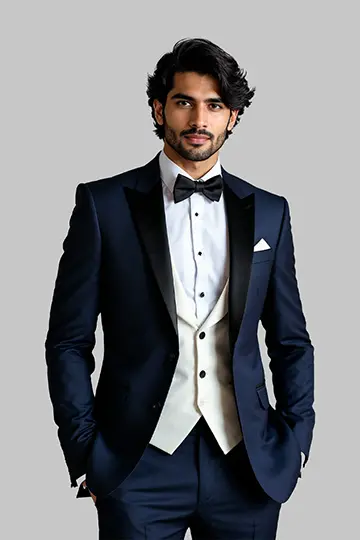
1. How Should a Suit Fit Across the Shoulders?
The jacket should sit cleanly across the shoulders. A shoulder line that extends unintentionally beyond the wearer’s natural proportion can make the jacket look too large, while a shoulder that is too narrow may create pulling through the upper sleeve or chest. Some fashion-led silhouettes intentionally use a stronger or more extended shoulder, so the question is whether the shape is deliberate and balanced – not whether every jacket follows the same rule.
2. How Should a Suit Fit at the Chest?
Button the jacket and look at the front. The chest should lie cleanly and the jacket should close without strong pulling around the main button. At the same time, there should not be large areas of loose fabric through the torso. Then move your arms and breathe normally. A jacket that looks sharp only when the wearer is completely still is not properly tested.
3. Judge Jacket Length by Overall Proportion
There is no single jacket-length number that works for every wearer or every silhouette. A tailor should judge the front and side view together: the jacket needs to balance the torso and legs, maintain a clean line over the seat, and suit the intended style. A formal classic jacket and a shorter fashion-led silhouette may intentionally differ. The approved length should therefore be checked in profile, not only from the front.
4. Check the Collar and Upper Back
The jacket collar should sit neatly against the shirt collar. A visible gap, persistent bunching or repeated horizontal creases across the upper back can indicate that the balance needs attention. Temporary creases caused by movement are normal; the concern is a fit issue that remains after the wearer returns to a natural standing position.
5. Set Sleeve Length With the Shirt You Will Wear
Sleeve length should be checked with the intended shirt. The jacket sleeve should finish cleanly near the wrist, while allowing a controlled amount of shirt cuff to remain visible. The exact amount is a styling choice, but both sleeves should look even and should not cover most of the hand.
6. How Should a Suit Fit Through the Trousers?
Trouser fit should be checked as carefully as the jacket:
Waistband: it should sit securely without depending on an overly tight belt.
Seat: the fabric should not pull sharply or create persistent horizontal stress lines.
Thigh: there should be enough room to walk and sit without tightness, but not so much excess fabric that the leg loses shape.
Rise: it should remain comfortable when sitting and should not force the waistband into an uncomfortable position.
Hem: set the final length while wearing the intended wedding shoes, because the shoe changes how the trouser break appears.
7. Check the Waistcoat as Part of the Full Three-Piece Look
If the suit includes a waistcoat, button it and check the torso while standing and sitting. It should follow the body without sharp pulling. The length should work with the trouser rise so the shirt is not prominently exposed between the waistcoat and waistband.
8. How Should a Suit Fit While Sitting and Moving?
A wedding suit needs a movement test. Do not finish the fitting after a standing mirror check.
Sit in a normal chair. The jacket should not feel excessively restrictive or pull sharply at the button. If the style calls for unbuttoning the jacket while seated, test the sitting comfort both before and after doing so.
Walk several steps and turn. The trousers should move without tightening uncomfortably through the seat, rise or thigh.
Raise and extend the arms naturally. Some jacket movement is expected, but excessive lifting, pulling or restriction should be reviewed by the tailor.
Return to a neutral standing position. Creases caused by temporary movement should relax; persistent pulling or repeated stress lines deserve another fit check.
Common Fit Problems to Review
An unintentionally extended shoulder line or shoulder shape that does not match the intended silhouette.
Strong pulling at the jacket button or chest.
Persistent collar gap or upper-back bunching.
Uneven or overly long sleeves.
Trouser stress lines across the seat or thigh.
An uncomfortable rise when seated.
Excess trouser stacking over the intended shoes.
A waistcoat that pulls sharply or exposes too much shirt at the waistband.
How Mizaj Combines Measurement, Premium Craftsmanship and Structured Manufacturing
Bodies do not always match standard size blocks. Shoulder width, chest, waist, posture, sleeve length and trouser proportions can vary independently. At Mizaj, individual measurements are considered together with the intended silhouette and fit preferences before the garment moves into pattern preparation, precision cutting and construction.
The suit is produced through a structured, factory-based manufacturing process designed to improve consistency in cutting, stitching, shaping, finishing and quality inspection while still allowing the garment to be customised around the wearer.
Construction quality also depends on the materials and components used where applicable. Mizaj uses Gutermann threads, backed by more than 160 years of expertise from Germany, to support quality stitching. Freudenberg fusing, from a German performance-materials company established in 1938, is used where appropriate to support the structure of areas such as collars, lapels and front panels.
Finishing details matter as well. Jindal Buttons brings more than 30 years of expertise and Italian technology to button manufacturing, while YKK – established in Japan in 1934 and recognised as the world’s leading zipper manufacturer – is used in applicable products where dependable fastening is required. These details support the broader objective: a suit that looks balanced, holds its intended shape and remains comfortable through real movement.
See how our customisation process moves from measurement to final try-on.
What Quality Construction Should Feel Like
A premium suit should not only look neat when first worn. The collar, lapels, front panels, seams and trouser lines should remain controlled through normal movement. Precise stitching, appropriate internal support and consistent finishing all contribute to how well the suit keeps its intended shape.
FAQs
How tight should a suit jacket be?
It should follow the torso without strong pulling at the chest or button. You should be able to breathe and move comfortably while the jacket keeps its intended shape.
How do I know if the shoulders fit?
Look for a clean, deliberate shoulder line. If the shoulder extends, confirm that it is an intentional styling choice rather than excess size. Pulling, collapse or imbalance should be reviewed by the tailor.
Should suit trousers touch the shoes?
The final hem should be set with the intended shoes. The amount of trouser break is a style choice, but excessive stacking usually looks untidy.
Why should I test the suit while sitting?
A wedding suit is worn for hours. Sitting reveals issues in the rise, seat, thigh and jacket comfort that may not appear during a standing-only check.
What if my Mizaj suit needs adjustment after the fitting?
Tell our team exactly where movement, balance or comfort feels wrong during the fitting and again at collection if needed. The alteration support available can depend on the garment and agreed order terms, so confirm the applicable process with the store handling your order.
How Should a Suit Fit? Your Final Checklist
Before you approve a wedding suit, check it from the front, side and back; sit down; walk; raise your arms; and wear the intended shirt and shoes. A good fit is not simply a close fit. It is a balanced silhouette that remains comfortable through the movements the groom will actually make on the wedding day.
How Should a Suit Fit? Slim, Regular and Relaxed Styles
A slim suit follows the body closely, a regular fit allows more ease, and a relaxed silhouette gives extra room by design. None of these labels guarantees a good fit. The important question is whether the garment hangs cleanly and supports the way you move. Compare the same standing and sitting positions in each style before deciding which one suits you.
How should a suit fit if you prefer a slim silhouette?
The waist can look shaped without forcing the button to carry visible tension. Check the chest when taking a normal breath and the trousers when stepping forward. If you need to hold your stomach in, change your posture or avoid sitting to make the suit look right, ask for another assessment. A narrow outline should still feel wearable throughout the occasion.
How should a suit fit with a more relaxed cut?
Extra fabric should create an intentional line rather than collapse into uneven folds. Look at the shoulder shape, the fall of the sleeve and the trouser leg together. A fuller jacket paired with extremely narrow trousers may create a balance you did not intend. Discuss the complete outfit with the tailor, including whether you prefer a traditional formal appearance or a contemporary silhouette.
How should a suit fit when your posture is uneven?
Stand as you normally do, with your arms resting naturally. Do not straighten into an unfamiliar pose simply because you are being measured. Tell the tailor if one shoulder sits lower or if your usual stance changes how the jacket hangs. Small differences between the two sides of the body are worth discussing during the fitting rather than hiding by pulling the jacket into place.
How should a suit fit with everyday items in your pockets?
Try carrying the essentials you actually expect to use, such as a phone or a small wallet. Heavy or overfilled pockets can distort an otherwise clean jacket and change the trouser line. Keep bulky items elsewhere when possible. Check the suit again with the pockets empty so you and the tailor can distinguish the effect of your belongings from a garment adjustment that is genuinely needed.
Record the changes before collection
After the fitting, confirm which changes have been agreed and when you can try the garment again. Describe the location and the movement that causes discomfort instead of saying only that the whole suit feels tight. For example, explain that the trousers pull at the thigh when sitting or that one sleeve appears longer with your intended shirt. Clear observations make the next fitting more useful.
Prepare for a More Useful Suit Fitting
Wear the right layers
A fitting is easier to judge when you recreate the outfit you intend to wear. Bring the actual shirt rather than a much thicker or thinner substitute. If you will wear an undershirt, include it as well. These layers can change how the collar sits, how the chest feels and how much cuff appears. Keep the shirt tucked in neatly before reviewing the jacket and waistcoat.
Choose shoes before approving the hem
Different shoes have different shapes and heights over the foot. A trouser hem that looks clean with one pair can stack or sit higher with another. Bring both shoes and stand with your weight distributed naturally. Ask the tailor to show the proposed break from the front and side. Walk a few steps before approving the length so you can see how the fabric settles.
Explain what your occasion involves
A groom who will spend hours greeting guests may need to prioritise easy arm movement and standing comfort. Someone planning to dance should test longer steps and natural turns. Explain these activities before the final adjustment. You do not need to imitate every movement dramatically; a calm, realistic demonstration helps the tailor understand where the garment feels restrictive without confusing extreme stretching with normal use.
Check the outfit without posing
Photographs can be useful when they show an ordinary stance. Ask for a front, side and back view with the camera held level, and avoid twisting your body to improve the picture. Compare the photographs with what you feel while wearing the garment. A photograph cannot reveal pressure at the waistband or discomfort in the rise, so give your own experience equal attention during the discussion.
Separate styling choices from fitting problems
A wide lapel, an extended shoulder or a cropped trouser can be intentional. Before requesting a correction, compare the garment with the silhouette you agreed. Ask the tailor whether a fold comes from the design, your posture, the way the fabric drapes or a point that needs adjusting. This conversation helps preserve the look you chose while identifying discomfort and imbalance that should be addressed.
Discuss alterations before approving them
Do not assume every part of a finished suit can be changed equally. Ask what is practical for the garment, whether the proposed adjustment affects another area, and when a further try-on is possible. Review any cost and timing with the store. If the occasion is approaching, agree on collection arrangements early enough to allow a final inspection with your shirt, shoes and accessories.
Repeat the check at collection
Put on the complete outfit after the agreed alterations, rather than checking the suit only on a hanger. Revisit the areas you raised at the previous appointment and confirm that the new result feels comfortable. Sit, walk and return to a natural stance once more. Before leaving, check that you have collected every piece, including the waistcoat if ordered, and ask the team how to transport and store the suit.
Plan Your Next Suit Fitting
When asking “how should a suit fit?”, bring your intended shirt and shoes. Use our groom wedding suit checklist to prepare for collection and compare wedding suit colours before deciding on your look.
For a personal fit consultation, find your nearest Mizaj store and ask the team to review your suit while standing, sitting and walking.
How Should a Suit Fit at Each Fitting?
At the first appointment, discuss your preferred silhouette and posture. At the try-on, ask “how should a suit fit?” while checking the front, back and side together. At collection, repeat the same movement checks instead of relying on the measurements alone.
If you are arranging a fitting in Dubai, explore Mizaj UAE and confirm appointment arrangements with the local team.